
Some nights, it’s 11:05 before you finally make it to the couch.
The kids are asleep. You’ve brought yourself a glass of water. For a moment, there is nothing you have to say.
Then you remember the spare clothes. There should be another set in the bag. And tomorrow’s lunch—was there enough left from dinner? Somewhere down the hall, a floorboard creaks, and you stop listening to whatever is on television.
You haven’t stood up. From the other end of the couch, you probably look like someone taking a break.
It doesn’t quite feel like one.
When both people have a list
In a parenting discussion, a father described a familiar evening disagreement. He worked full-time; his wife stayed home with their two young children. He said he handled grocery shopping, cooked several dinners a week, took out the trash, arranged weekend activities with the children, and did Sunday meal prep.
His wife still wanted him involved in the evening cleanup, including the dishwasher and tidying up.
He recognized that they both worked hard in different ways. He wanted to understand what a fair evening handoff might look like.
Those details matter. This wasn’t an account of someone doing nothing. It was also his account, not his wife’s; we don’t have her description of the same day.
But the question he brought is worth staying with. Two people can lay out everything they have done and still not have answered what happens next.
Who is finishing the kitchen? Who is listening for the children? And when one person sits down, has the other actually taken over—or has the work simply become less visible?
There are evenings when the conversation about these things turns into a defense of the whole day. A request about the dishwasher meets a list of everything already done. The person asking feels unheard; the person answering feels that their effort has disappeared.
The dishwasher is still waiting.
What each person contributed, and when each person gets to stop, are related questions. They aren’t quite the same question.
The work that starts before anything happens
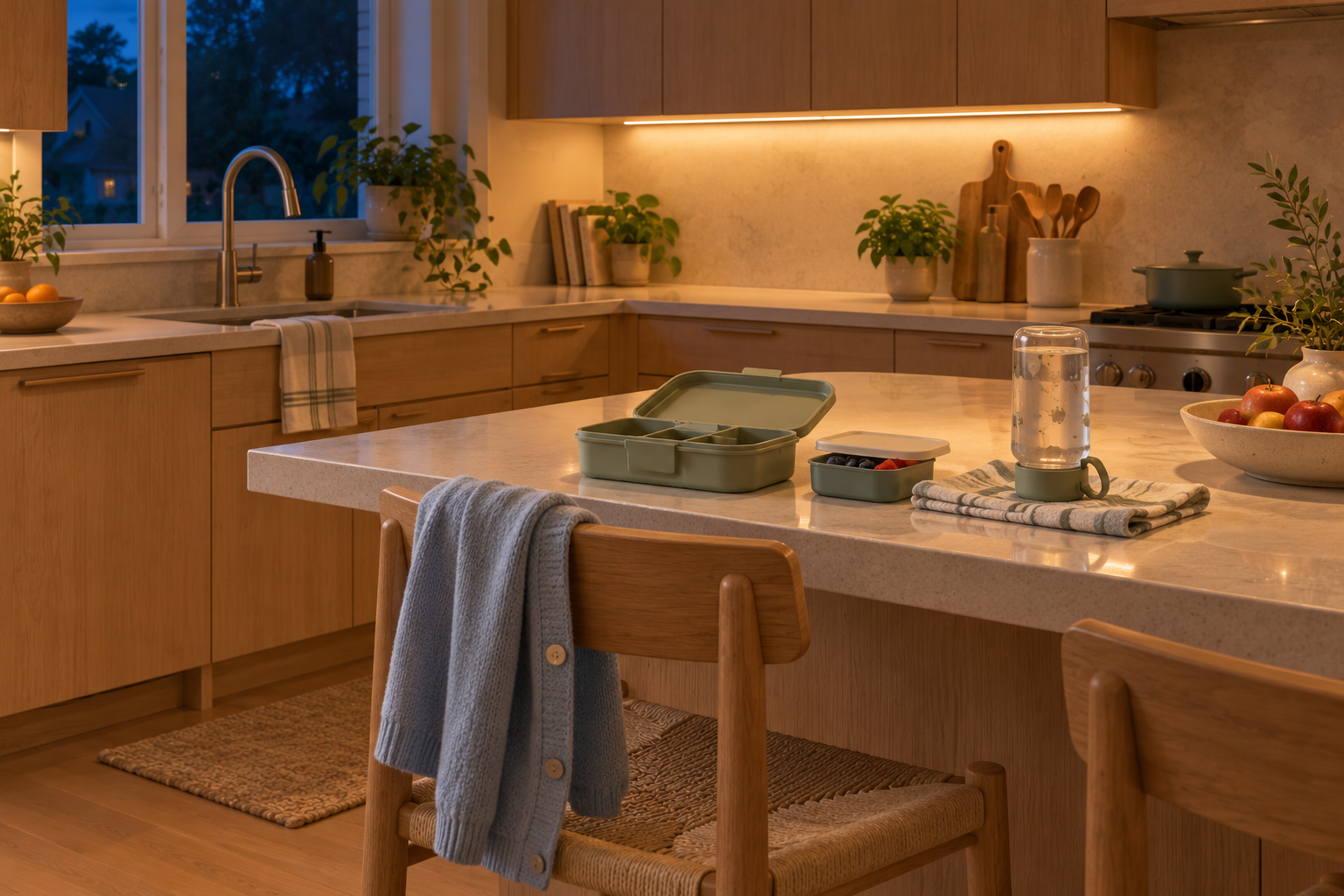
Another father, with a toddler and a young baby, described figuring out three meals and two snacks for his older child each day as one of the hardest parts of parenting. He wanted the child to eat well. Sometimes food was refused; sometimes he was too busy. He was looking for a rhythm that felt manageable.
The plate on the table was only the visible part.
Before that came deciding what to offer, remembering what was available, and trying again when the plan didn’t work. Even after one meal was over, another was approaching.
This kind of thinking doesn’t belong to mothers by nature. It can settle with whoever has become responsible for keeping a particular part of family life moving.
And it can be difficult to hand over if both people understand the job only as its final action.
Someone can make lunch and still leave another person responsible for deciding what lunch should be. Someone can respond when a child calls and still turn back for instructions about every next step.
The help is real. So is the responsibility that remains.
That distinction doesn’t explain every tired parent. Some families simply have too much work, too little sleep, or nobody available to take over. A clearer conversation cannot supply hours or energy that aren’t there.
But where there is room to share, it may help explain why being seated doesn’t always feel like being off duty.
A smaller conversation for tonight
If you and your partner are willing to work on this together, the conversation doesn’t have to begin with an inventory of your entire life.
It might begin with what is still ahead this evening.
What actually needs doing before bed? What can wait? Is there something one person is still keeping track of, even though nobody is working on it right now?
From there, it becomes possible to talk about taking over a stretch of the evening, rather than waiting to be handed the next task.
Perhaps one parent handles the children for a while, including deciding what to do if someone needs them, while the other steps away. Necessary information still needs to be shared. Questions are allowed. Taking over doesn’t mean having to guess where something is or withholding information to prove a point.
The useful question is whether one person can let their attention go elsewhere without continuing to direct the work from across the room.
That also means the conversation itself shouldn’t become another job for the same person: prepare the list, assign the tasks, explain the system, check that it happened.
Both people can help notice what remains. Both can say what they need. And both can ask whether the other has had any time that felt like a break—not just time spent sitting down between requests.
Some nights, even this is more conversation than anyone has left.
Then tonight can stay small. Divide what cannot wait. Leave what can. There is no need to turn the last exhausted half-hour of the day into a meeting about how the family will operate forever.
Nor is every unequal arrangement a misunderstanding. When one person is carrying far more, or the other refuses to share, finding a better question is not the whole answer.
But for two people who want to care for each other and keep missing each other in the evening, it offers somewhere more specific to begin.

Back to the couch
Family life rarely reaches a moment when absolutely everything is finished. There will be another meal, another load of laundry, something that needs replacing or remembering.
A break may have to happen before the list is empty.
What can change is knowing who has the next part—knowing that, for a little while, you aren’t the person who must keep listening, deciding, and getting ready to move.
You sit down again. The glass is where you left it.
This time, perhaps you notice that the water is cold.

